
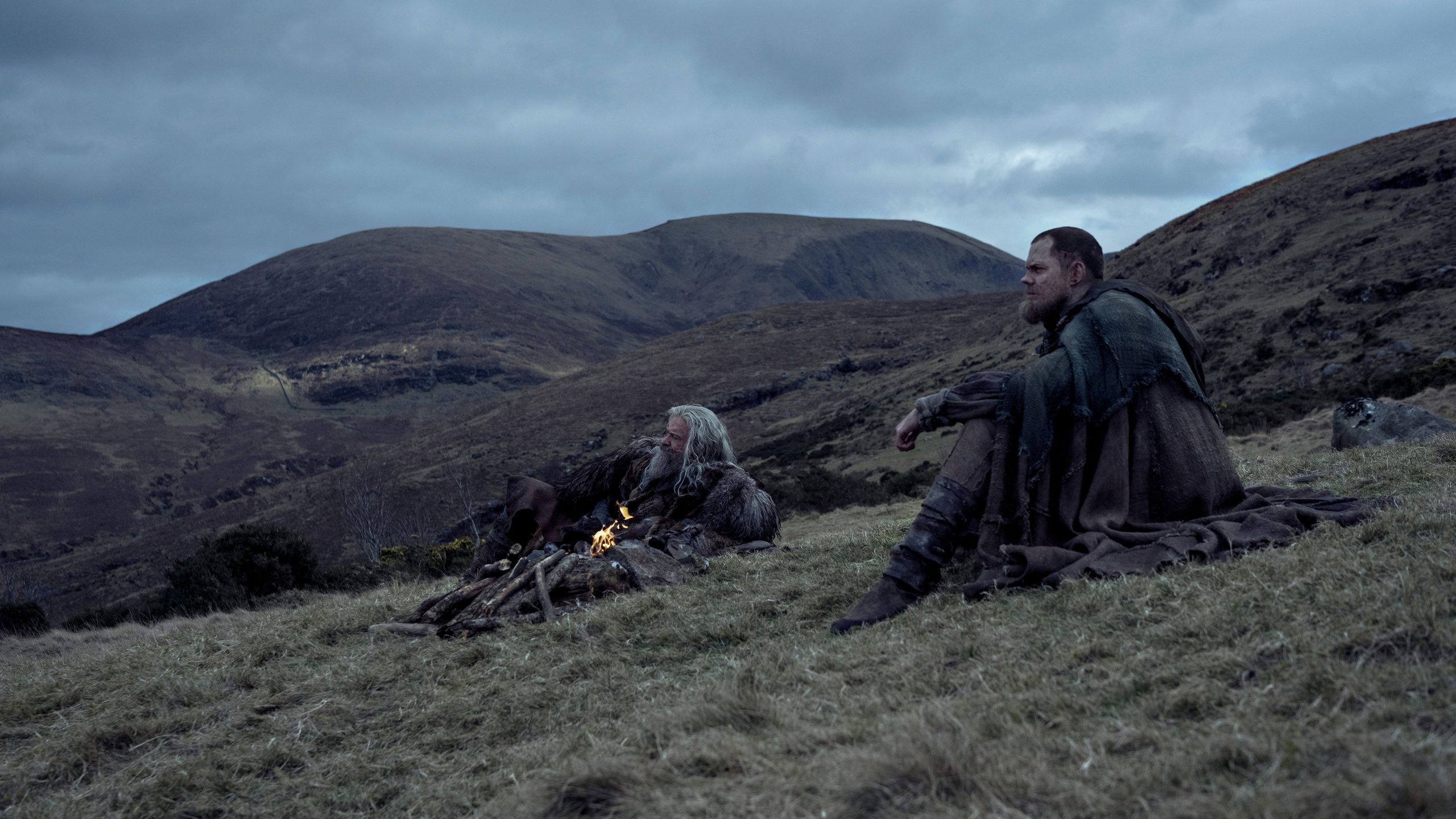
I was looking for something to watch on a much-delayed flight from Newark to Raleigh and my friend Brett Boham recommended this on his podcast Weekend at Bergman’s, so instead of the Marvel or DC fare that’s practically made to be watched on a dimly-lit seatback tablet that also has Angry Birds on it, I chose this. The conditions were not ideal — I was sleepy, there was turbulence, and the film was constantly interrupted by announcements about the weather — but I figured that a) if I missed anything, I could just rewatch it, and b) if The Death of Robin Hood was worth going back for something — images, context, acting, whatever — that’d be pretty solid evidence that a good time was had.
I didn’t miss anything, but even if I had there wouldn’t be much to go back for. I love a Robin Hood movie, and I’m pretty susceptible to the modern medieval when it’s not done in the ostentatious drone of Robert Eggers, and there is something to this movie, but not enough, which is a shame. I’ve seen a lot of comparisons to John Wick due to the “ultraviolence,” but that’s not right. Hugh Jackman’s Robin Hood has far more in common with the John Rambo of First Blood — a weary, wounded, PTSD-stricken man who wanders his country in exile because it holds no home for men who remind its nobility of the blood required to turn the gears of its petty empire — but it’s mostly a tone piece, all smoke and Irish countryside and big plays at the monstrousness of commonly-held heroes with no sense of urgency or purpose.
You can, of course, do what you want with its often-striking image. Part of me is compelled to do so, to argue that it argues that men are born, live, and die so that their culture can assign them a place and purpose in the universe once they have no more killing to do, but that’d be pushing it. The fact that The Death of Robin Hood isn’t fun feels more pointed than a lot of post-The Dark Knight attempts at re-adapting public domain sword-and-arrow heroes like Robin Hood and King Arthur, but the fact that Jackman doesn’t have a twinkle in his eye about the scores of bodies who’ve fallen dead at his feet doesn’t automatically make the point, nor is that point automatically interesting.
I do think the performances and cinematography are stellar, as is Jim Ghedi’s score, which aches and sighs with the weight of generations of spiritual and physical suffering, a drone from which a voice occasionally rises to ask that it be remembered somehow, that all of what transpired before living memory did so not in vain, but for a purpose. It’s an interesting counterbalance to a script that argues plainly that Robin Hood did what he did — killing and lots of it — not for the poor or even against the rich, but because he kinda liked it until he didn’t. There’s almost a point there, but to reach it I think The Death of Robin Hood would have to be about our culture’s desire for dark and gritty reboots, as opposed to just being one itself.
The Death of Robin Hood (2026)
Directed by: Michael Sarnoski
Screenplay by: Michael Sarnoski
Cinematography: Pat Scola
Starring: Hugh Jackman, Jodie Comer, Bill Skarsgård, Murry Bartlett, Noah Jupe, Faith Delaney, Clive Russell, Jade Croot
Released: June 19, 2026