
When I was young, my mom let me watch whatever films she was watching. I didn’t realize how strange this might seem to other people until I mentioned seeing stuff like The Silence of the Lambs when I was nine to a friend in college who was taken aback (which is something that’s now in the “easy shock” rotation) — it seemed normal to watch a movie with my mom at the time, and in retrospect I’m glad she went about my media consumption in this way. I liked watching movies with her, and as a single mom who worked a crazy shift at the Ford plant, she probably deserved to watch The Silence of the Lambs on VHS over Brother Bear or whatever was cooking at the time.
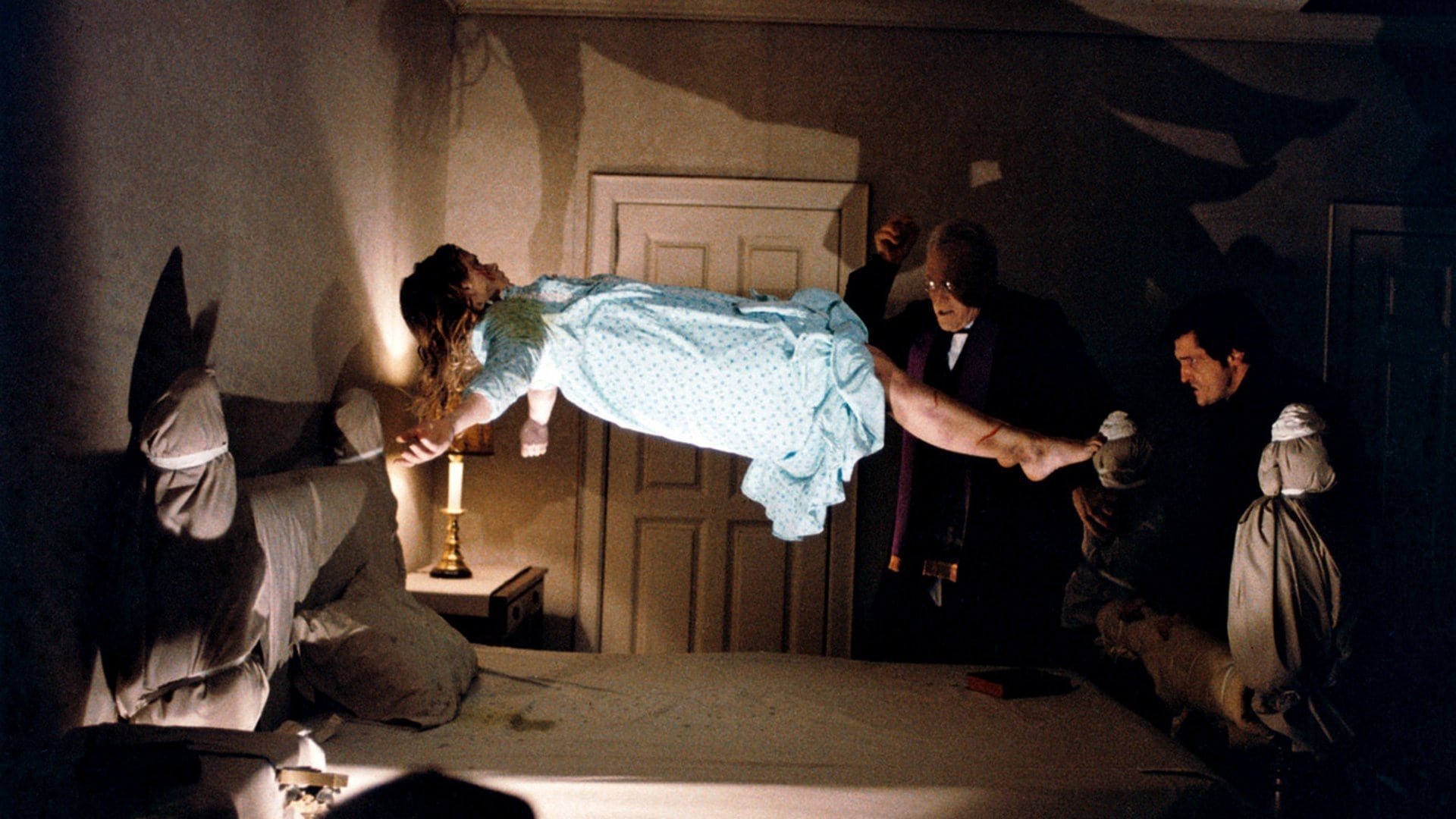
She would let my sister and I pick videos at the store, and with the exception of one film, none were refused. That movie was The Exorcist, which I’d seen commercials for on TV because it was getting a theatrical re-release with additional footage — The Version You’ve Never Seen — complete with the shot of Regan crawling down the stairs. Her reason is one that I’ve found extremely funny for a long time now, when, in one of the few moments I can recall her getting deep in her bag about Catholicism, she said “we do not invite the Devil into our house.” It’s funny, but I also respected her fear of the movie enough that I never watched The Exorcist until this year when, fifteen minutes into the movie, she called to say hello, as if called into being by some unspoken bond between us getting broken.
I hate to be the sort of person who says “Well, it’s not that scary,” of a cornerstone horror film from 1973, but The Exorcist wasn’t that scary. It’s tense. It’s aggressive. It’s unsettling. But there’s a critical distance between William Friedkin and his subject — not really the Devil, but Catholic faith and spirituality — that, like how his distance from queerness imbues The Boys in the Band and Cruising with a certain leering quality, makes it difficult for me to believe that the most famous aspects of Regan’s (Linda Blair) possession, down to the Ouija board and the entity’s introduction as Captain Howdy, weren’t meant as a means of releasing the pressure from the true nature of what’s facing her and her mother (Ellen Burstyn): the terror of the unknown.
I think the most remarkable thing about Friedkin’s direction of The Exorcist is that despite his skepticism and drive to shock, he doesn’t place himself above William Peter Blatty’s script or novel, both of which he saw and treated as great works of literature. All of the stories I’ve heard about the shoot make him out to be the devil at its center, firing guns to elicit surprise from his actors, slapping a priest to draw out the proper emotional response to a scene, rigging stunts and special effects that injured Burstyn and Blair, all in pursuit of capturing the soul of the novel. It’s not something I can justify by pointing to the performances and images he illicit, but holy shit does The Exorcist do an astonishing job of exploring faith (and the lack of faith) in the age of science, the spiritual torture of not knowing whether what you’re doing for yourself or someone under your care is right, the inner turmoil of small people cast against a history far longer than any of us know or experience.
The question Friedkin is interested in is not whether or not demonic possession is real. His film treats it as a fact, and works to punch as many buttons as possible to make you believe, but what he’s really after is the nature of the zealot, in whether or not people are so convinced of their faith that they would die for it. Damien Karras is an incredible vehicle with which to explore the terrain of that question, and Jason Miller is astoundingly good as its pilot, at once still, almost inert from the grief of losing his mother and his faith, but constantly battling — himself, his doubts, the entity possessing Regan.
I can’t tell you anything new about The Exorcist except that I think my mom has been missing out on it. She’ll never read this or listen to me when I suggest she should maybe give it a shot some time, but for a film she was concerned would invite the Devil into our home, it’s a staggering affirmation of the faith she still professes, as Karras, troubled though his belief in God may be, is willing to die for it. His journey to that point is one of high wire tension as Regan’s condition deteriorates. Regan’s path towards Karras’ care is harrowing, too — the medical procedures depicted here are the true terror, and there’s a lot of rueful material about pedological health care, including what might be film’s first Ritalin prescription. We’re assured that she doesn’t remember any of the stuff that happened to her in The Exorcist, but they’d just discovered ADHD — how much does anyone in this movie know about the brain’s ability to suppress trauma?
A masterpiece, and also maybe not even a top five Friedkin for me. I really need to get around to Sorcerer, y’all. Maybe even Blue Chips.
The Exorcist (1973)
Directed by: William Friedkin
Screenplay by: William Peter Blatty
Cinematography: Owen Roizman
Starring: Ellen Burstyn, Max Von Sydow, Jason Miller, Lee J. Cobb, Linda Blair
Released: December 26, 1973