
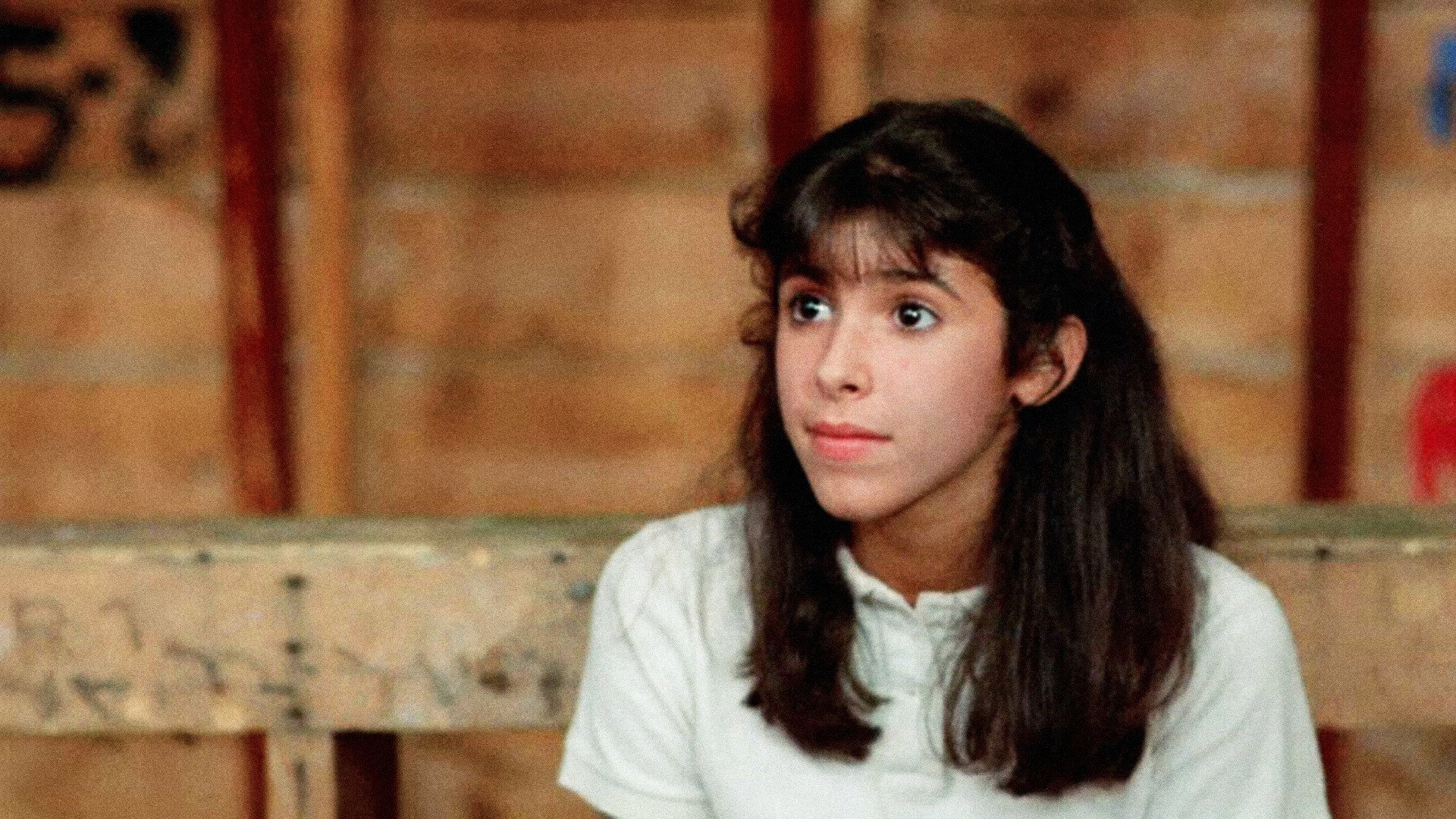
The first time I saw Sleepaway Camp was in 2010, during Roger Ebert’s Ebertfest in Champaign, IL. This was not an official screening. I was staying with a friend, and we were walking home from dinner, and some folks were playing this on a sheet hung up in their garage. We drank beers from the dozen or so coolers strewn about the backyard, laughed through the movie’s increasingly improbable sequence of kills, and then it happened, the ending, which, more than anything else, is the reason Sleepaway Camp has persisted in the culture since its 1983 release.
I remember a lot of moments from Ebertfest with crystal clarity: meeting Roger, trying and failing to get into an argument with Charlie Kaufman about his claim that Pink Floyd: The Wall was the only great rock musical (which was, in fairness to him, something I overheard him say to someone else and was not a prepared comment), asking Barbet Schroeder to tell the story of how he kept the cut for Barfly, but more than anything else I remember how terribly, horribly seen I felt by this goofy-ass slasher film I’d had a drunken, random encounter with. I was still five years off from “successfully” coming out as trans, but had been struggling with my identity for most of my life, trying and failing to get someone to recognize that something was terribly out of alignment between myself and the rest of the world.
Sleepaway Camp isn’t trying to be an a-ha moment for anybody. Its takes on queerness and transness are, frankly, cruel and mocking, accidentally transfigured into something else by the performance of Felissa Rose as Angela and the yet-unrealized queerness of some of the folks involved in its making, which is expressed in the film largely through wardrobe choices and the way certain actors carry themselves. Angela, to spoil the hell out of this movie, is the killer, but she’s also a lifelong victim of her aunt, a psychologist who adopts her after a (rather queercoded) boating accident claims the life of her father (and her father’s “friend”) and raises her as her daughter.
The issue is that Angela was assigned male at birth and lived as a boy until the adoption, at which point she was force femmed to fulfill her aunt’s fantasy of having a daughter. This confusion, and the fact that she’s at arguably the worst possible summer camp even a happy-go-lucky cisgender child could end up at, causes her to snap, murdering the campers who bully her for not showering or swimming with them and sawing off the head of the one boy at camp who takes a romantic interest in her. She is found screaming, covered in his blood, and naked, the big shock of the film being that, to borrow the title of another movie, you can see everything.
And I did. I saw myself, steadily withdrawing from life, awkward and shy and alone in a crowded room, not wanting to be in the world with other people or in a physical body at all. I gradually worked at this. I am still working at this, if I’m being honest. And in all of that time Sleepaway Camp‘s power grew in my head, up there, however improbably, with other movies that served as something of a wakeup call like Synecdoche, New York and Carol and Jackass Number Two.
So when Triangle Queer Film was looking for a horror movie to screen around Halloween, I floated this one, and me and my friends got to play it at a gay rock venue in Durham for a sold out crowd, going through strange back channels to get it done in a way that felt legal but probably won’t be possible once Shout Factory puts out a 4K restoration that’ll be playing for heterosexual gorehounds at the Alamo Drafthouse sometime next year. It’s a fucking riot, Angela does no wrong, and her aunt exists at one extreme end of a spectrum of trans healthcare providers whose other end is Hannibal Lecter in The Silence of the Lambs — if she’d treated Jame Gumb, there’d be no Buffalo Bill.
Sleepaway Camp exists in a canon that is at once grim and wonderful, where the filmmaker’s gaze is pointedly suspicious of queerness/transsexuality but the end product makes me (and others, I’m sure) feel more powerful than anything else. I don’t know what it is about this, Psycho, Cruising, and A Nightmare on Elm Street 2: Freddy’s Revenge that make me feel so charged, whether its something bubbling to the surface from the closeted hearts of their cast and crew or the way the depiction of queerness as something to be feared (to say nothing of these films’ failures to explain or eradicate it) makes that otherness feel powerful. I’m glad they exist, though, and I’m glad my encounters with them were, for the most part, out of the blue. I’m even happier that I got to share this one with a group of good people last month — the accidental queer psychosexual epic is a lot more fun to experience in a crowd than the intentional, overly academic, navel-gazing version of the form.
Sleepaway Camp (1983)
Directed by: Robert Hiltzik
Screenplay by: Robert Hiltzik
Cinematography: Benjamin Davis
Starring: Felissa Rose, Jonathan Tiersten, Karen Fields, Desiree Gould
Released: November 18, 1983